|
This is the key to the cleaning process. There are basically two types of oxides - polishing and cutting. The oxides are similar in texture to baby powder.
The polishing oxides include aluminum, cerium and others. They only remove elements that are attached to the glass such as lime deposit, mineralization, rust stain, food stain, etc. - not etching and/or scratching. Since polishing oxides are softer then glass, they will not cut away at the glass, thus they do not affect embossing, but do give the glass the "spit clean" shine. These are the same materials used to polish eye glass lenses.
Aluminum oxide is on the hard side of the polishing world and is inexpensive. On a scale from 1 to 10 with 10 being the hardness of glass, it would be about an 8. It is a good all-purpose polish and it is my favorite because of its cost and ease of cleanup. Sometimes it is too hard for soft glass (Such as pre 1850 glass and some amber glass).
Half-Micron Aluminum is a soft polish (around a 5). It works best on extremely soft glass (such as pre 1850 glass and amber). It will also give a better shine on the glass. It cannot effectively remove frost from cutting on medium to hard glass
The cutting oxides remove etching and scratching. The cutting oxides are available in various grit sizes depending on the severity of the etching and/or scratching and the properties of the piece itself. The cutting oxides can remove etching and/or scratching in about 3 days or the entire embossing within 12 hours depending on the grit used. The cutting oxides are better left unused until you become familiar with your machine and the removing capabilities of the polishing compounds. At this point you will have a better sense of what types of sickness will require cutting oxides.
1500 Grit White Aluminum is an extremely fine grit oxide. It is a very mild cutting oxide that is used to remove the frost left by the 1200 grit brown-fused aluminum (especially on hard glass). Unlike the "polishing" oxides (like aluminum), this oxide starts out as a cutter, but, breaks down in the first 24 hours into a polish. Most of the time it will be your last step in the polishing process. If the glass is too soft, you may have to follow it with polish. Its other advantage is that a mildly etched piece used to have to be cut with 1200 and then polished, now it can be cleaned in one step with the 1500.
1200 Grit Brown-Fused Aluminum m is an extremely fine grit oxide. Since it is
harder than glass, it is an effective cutter that is used to remove light scratching and etching from the glass. It is safe to use around embossing. Depending on the hardness of the glass, it will generally take around two weeks on the machine before the embossing will start to show a rounding effect on the sides. The 1200 will generally (except on very hard glass) leave a light frost on the glass which will require a second turning using polish.
1000 Grit Brown-Fused Aluminum is an moderate cutter. Sometimes the leap between 600 grit and 1200 grit is a little too much for the 1200 to handle. The 1000 grit acts as good intermediate step. It is also a good candidate when 600 grit is a little too aggressive for the item that you are wanting to clean, but, the 1200 can't quite cut it out. It should be used with moderation with embossing, as it will round off the edges of the lettering.
600 Grit Brown-Fused Aluminum is not to be used around embossing (it will remove embossing from a bottle in as little as 24 hours). It is an extremely fast cutter that is used when the inside of a bottle (or outside of an unembossed bottle) is heavily etched. 600 will leave a heavy frost which will require a second turning with 1200 followed by a third turning using polish
Loading and unloading instructions are available which include the recommended amounts of oxides to use for different item sizes. An example is 3 teaspoons for a pint fruit jar in a 5" canister. I recommend you start with a pound of oxide for every canister you will turn at the same time. Each pound should clean 30 to 35 tumblings. As you clean your items you will find which oxide works best for you and the objects you are cleaning.
Note: Oxides come in many different grade purities and grit sizes that can greatly alter the way they will work on glass. The supplied information is based upon the specific oxides that I sell.
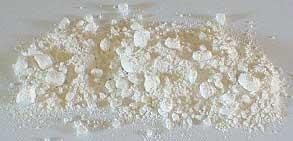
Aluminum oxide
|

1200 grit brown fused aluminum
|
|